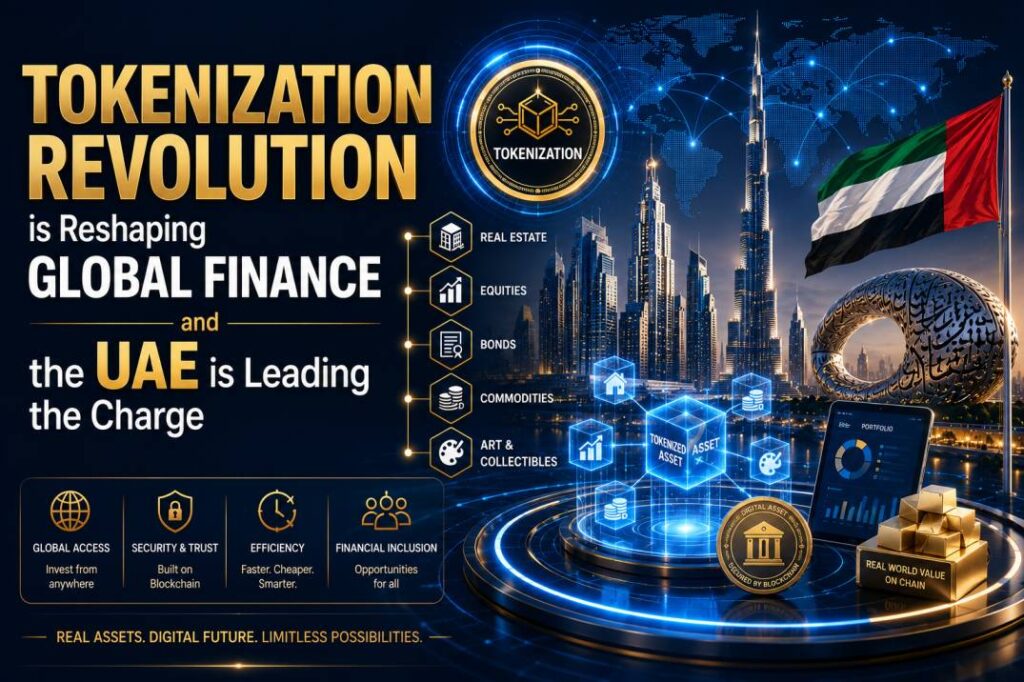
Tokenization UAE has moved out of the pilot phase and into production – and the country is further along than any other jurisdiction in embedding it into regulated financial infrastructure.
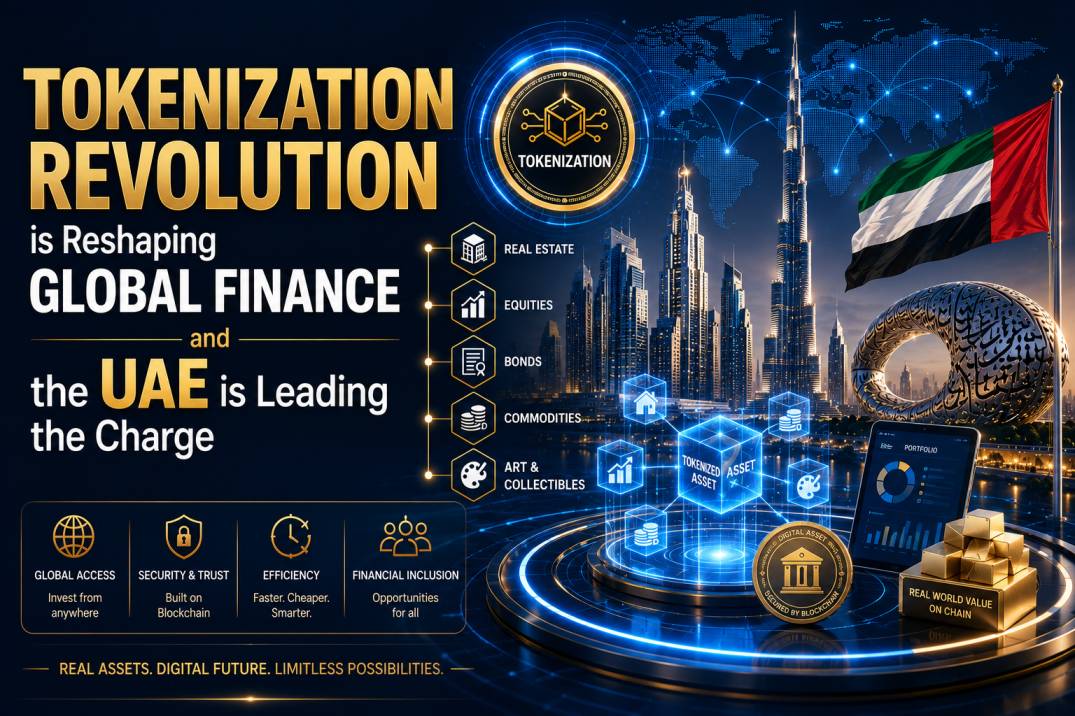 Tokenization has moved out of the pilot phase and into production – and the UAE is further along than any other jurisdiction. But the market is smaller than the headlines suggest, and the gap between “regulated” and “profitable” is where most ventures fail. Here is what the numbers actually say about tokenization in the UAE, and what it takes to build here.
In this guide
Tokenization has moved out of the pilot phase and into production – and the UAE is further along than any other jurisdiction. But the market is smaller than the headlines suggest, and the gap between “regulated” and “profitable” is where most ventures fail. Here is what the numbers actually say about tokenization in the UAE, and what it takes to build here.
Quick Answer
- Tokenized real-world assets on public blockchains reached roughly USD 31–33 billion by mid-2026 – up from about USD 5 billion at the start of 2025. Real growth, but roughly 400%, not the trillions often quoted.
- The UAE operates the world’s most complete multi-regulator framework: VARA’s ARVA rules in Dubai, the DFSA’s tokenisation sandbox in DIFC, ADGM’s FSRA regime running since 2018, and a federal layer under CMA Decision No. 4/R.M/2026.
- Dubai Land Department’s tokenised title programme moved from pilot to a regulated 24/7 secondary market on 20 February 2026 – the first government land registry anywhere to do so.
- The pilot channelled AED 18.5 million across investors from more than 50 nationalities, with one property fully funded in under two minutes.
- The constraint nobody advertises: secondary market liquidity across tokenized RWAs averaged under 3% of market cap in daily trading, against roughly 30% for comparable credit ETFs. Tokenization solves settlement. It has not yet solved liquidity.
1. What tokenization actually is
Tokenization converts ownership rights in a real-world asset – property, private credit, treasuries, commodities, fund units – into digital tokens recorded on a blockchain.
The mechanism matters more than the metaphor. In a properly structured deal the token does not become the asset. The asset is placed inside a special purpose vehicle; the SPV becomes the registered legal owner; and tokens represent beneficial ownership within that structure. In Dubai’s DLD programme, token holders receive a Property Token Ownership Certificate and their holding appears in the Dubai REST government app.
That legal plumbing is the entire product. Everything else is infrastructure.
Four things change once it works:
Settlement compresses. Traditional cross-border settlement runs on T+2 cycles and clearing intermediaries. On-chain settlement can be near-instant and continuous, removing counterparty exposure between trade and settlement.
Assets fractionalise. A high-value, illiquid asset can be divided into small units. Dubai’s programme allows participation from AED 2,000.
Compliance becomes programmable. Transfer restrictions, investor eligibility and distributions can be encoded in the token contract rather than administered manually.
Collateral becomes mobile. Institutions are increasingly using tokenized money market funds and deposits as continuously available collateral rather than one-off issuances.
2. The real size of the tokenization market
This is where most coverage – including a fair amount of professionally produced content – becomes unreliable.
You will see the tokenized asset market described as a multi-trillion-dollar market today. It is not. That figure conflates present reality with 2030 and 2033 projections, or silently includes stablecoins.
Here is what the tracking data actually shows for mid-2026:
| Measure | Value |
|---|---|
| Tokenized RWAs on public blockchains | ~USD 31–33 billion |
| Same figure, early 2025 | ~USD 5 billion |
| Tokenized US Treasuries (largest category) | ~USD 13–15 billion |
| Tokenized commodities | ~USD 7.3 billion |
| “Represented” value not freely transferable | ~USD 350 billion |
| Tokenized real estate globally | ~USD 439 million |
| Holders across ~167 platforms | ~960,000 |
Two observations follow.
The growth is genuine and steep. Roughly 400% in eighteen months, with institutional infrastructure arriving – the DTCC received an SEC no-action letter in December 2025 for a three-year pilot tokenizing custodied assets, with rollout expected in the second half of 2026. When the institution safeguarding over USD 100 trillion in securities starts testing on-chain settlement, the direction is set.
The absolute numbers are still small. Tokenized real estate globally sits around USD 439 million. That is not a market you can assume into existence; it is a market you have to build a specific, defensible position in.
If you are being pitched a business plan built on trillion-dollar TAM assumptions, the plan is not grounded. This is exactly the kind of assumption I test in pre-launch feasibility work before a client commits capital.
3. Why the UAE genuinely leads on tokenization
Strip out the promotional language and the UAE’s advantage is real, specific, and rests on two things other jurisdictions have not combined.
Regulatory architecture with defined lanes
Most jurisdictions regulate digital assets by extending existing securities law and enforcing case by case. The UAE built dedicated categories instead, spread across five separate financial regulators.
VARA (Dubai). The world’s first standalone virtual assets regulator. Its 2025 ARVA rules created a specific category – Asset-Referenced Virtual Assets – for tokens backed by real-world assets, with issuance and ongoing obligations attached. VARA’s April 2026 Guidance on Virtual Asset Issuance further separated direct-ownership tokens from stable-value tokens for reserve purposes.
DFSA (DIFC). Operates a dedicated Tokenisation Regulatory Sandbox covering equities, sukuk and fund units, under common law with independent courts.
FSRA (ADGM). A mature digital securities framework running since 2018 – the longest track record in the region, and generally the preferred route for institutional cross-border structures.
Federal layer. The Capital Markets Authority governs broker and exchange services under Decision No. 4/R.M/2026; the SCA covers security and commodity tokens; the Central Bank regulates payment tokens under PTSR 2024.
The practical value is not “friendliness”. It is knowing which regulator you answer to before you build, which is precisely what founders in fragmented jurisdictions cannot establish.
Production systems, not pilots
Real estate. DLD launched MENA’s first government-backed tokenised real estate project in May 2025 with VARA, the Central Bank and the Dubai Future Foundation – Prypco Mint as the VARA-licensed distribution platform, Ctrl Alt as infrastructure on the XRP Ledger, Zand Bank as banking partner. The pilot ran to February 2026, drew investors from over 50 nationalities, channelled AED 18.5 million, and had one property fully funded in under two minutes. On 20 February 2026 the DLD activated Phase 2, introducing a regulated 24/7 secondary market.
Commodities. VARA and DMCC signed a commodities tokenisation partnership in October 2025, with pilots on gold and diamonds.
Payments and settlement. The Central Bank continues to develop the Digital Dirham and has participated in multi-CBDC wholesale settlement work.
No other jurisdiction has a government land registry issuing ownership certificates against blockchain tokens with a live regulated secondary market. That is the strongest single claim the UAE can make here, and it is accurate.
4. The constraints worth pricing in
I would be doing you a disservice if I presented only the case for.
Liquidity is the unsolved problem. Secondary trading across tokenized RWAs averaged under 3% of total market cap in daily volume in Q1 2026, against roughly 30% for comparable liquid credit ETFs. Fractional ownership creates the ability to trade; it does not create buyers. A large allocator who cannot exit a position within a defined window will not get risk-committee approval regardless of how elegant the settlement layer is.
Most tokenized value is not actually mobile. Of the market, roughly USD 33 billion is distributed and transferable while around USD 350 billion is “represented” – sitting on a ledger but unable to move peer-to-peer. Operational efficiency, not open capital markets. Check which one a platform means.
Access is still restricted in places. The DLD programme required UAE ID holders during its pilot phase. Verify current eligibility before building a business plan around international retail participation.
Capital requirements are real. Viable ADGM tokenization platforms typically face capital requirements from USD 250,000 upward, before legal, audit and technology costs.
Licensing lanes are narrower than they appear. Most new entrants are building distribution, not infrastructure – which usually means a VARA Broker-Dealer licence rather than an issuance licence. Those are different applications with different economics.
None of this argues against building here. It argues for building with the numbers in front of you.
5. What it takes to launch a tokenization venture in the UAE
Three decisions, in sequence. Getting them out of order is the most common and most expensive mistake.
Step one – jurisdiction, chosen by asset and investor
Dubai mainland under VARA suits retail-facing virtual asset issuance and the broader Dubai ecosystem, and is the route tied to the DLD real estate programme. DIFC under the DFSA suits tokenised financial instruments with a common-law forum. ADGM under the FSRA suits institutional-grade structures and sophisticated cross-border SPVs.
The determining question is your asset class and who your investors are – not licence cost. See Free Zone Company Formation and Mainland Company Formation, and my full comparison in Mainland vs Free Zone vs Offshore.
Step two – corporate and SPV structuring
The asset must be isolated inside an approved SPV so the token represents a clean, enforceable claim. This is where tokenization ventures are actually won or lost. A token issued against a defective ownership structure is a liability, not a product. Offshore and holding structures often feature in the wider group, and existing overseas operators should look at foreign company setup.
Step three – regulatory licensing
VASP licensing, sandbox admission, or financial services permissions depending on jurisdiction and activity. Establish whether you need issuance or broker-dealer permissions early – they are not interchangeable.
Alongside these sit the operational realities: corporate banking, where digital-asset-adjacent businesses face extended compliance review; corporate tax registration and the qualifying-income tests that decide whether free zone status delivers anything; audit and financial reporting; and visas and PRO support for the technical team you will need to hire.
One correction worth making, because it appears constantly in tokenization marketing: a free zone licence does not deliver automatic tax exemption. A Qualifying Free Zone Person accesses 0% on qualifying income only, subject to substance and activity conditions. Non-qualifying income is taxed at 9% without the AED 375,000 threshold.
The same structural logic applies across the emirate’s wider digital economy – see How AI, Web3 and Renewable Energy Are Reshaping Dubai’s Economy in 2026.
6. My Approach: Matching the Licence to the Model
Most business setup consultants help you register a company. I help you make informed business decisions before you invest.
Tokenization is still a young enough space in the UAE that the right licence and structure depend heavily on what you are actually tokenising and who your investors are. Before recommending a route into this market, I look at whether your model needs a VARA licence, a DIFC or ADGM structure, or something else entirely, and whether the regulatory timeline matches your own.
My advisory process focuses on helping you reduce uncertainty and make confident decisions, not just complete documentation.
What You Can Expect
- Business idea validation
- Market research
- Competitor analysis
- Business plan development
- Startup cost estimation
- Financial feasibility analysis
- Business structure recommendations
- Licence selection guidance
- Investor and employment visa planning
- Business bank account strategy
- Risk assessment
- Business expansion planning
The objective is simple: help you start your business with clarity, confidence and a long-term strategy.
7. Is the UAE the right choice for your business?
If you are planning to launch a new venture, expand internationally, or relocate your business to the UAE, do not base the decision solely on promotional offers or the lowest licence price – and do not base a tokenization business plan on a market size figure you have not verified.
Build your business on research, planning and informed decision-making. The right strategy today can save you thousands in cost and position your business for sustainable growth tomorrow.
The UAE’s leadership in tokenization is real and, unusually for this sector, evidenced. A government land registry with a live regulated secondary market, four coordinated regulators with defined lanes, and production systems handling actual investor money. For founders who understand that tokenization is financial engineering rather than branding, there is no better-built jurisdiction to operate from right now.
The market is younger and smaller than the headlines claim. That is an argument for entering with clear eyes – not for staying out.
Ready to build your business with confidence?
If you are considering setting up a business in the UAE, let’s start with strategy – not paperwork. Together we will evaluate your goals, analyse the market, identify the right setup options, and create a roadmap tailored to your vision.
Because successful businesses aren’t built by chance – they’re built on informed decisions.
Book a free consultation or message me directly on WhatsApp.
Frequently asked questions
Is real estate tokenization legal in Dubai?
Yes, and it is government-operated rather than merely permitted. The Dubai Land Department runs a tokenised title programme with VARA, the Central Bank and the Dubai Future Foundation. It moved from pilot to a regulated 24/7 secondary market in February 2026. Issuers require appropriate VARA licensing and the underlying asset must sit in a regulated SPV.
How much do I need to invest in tokenized Dubai property?
Participation in the DLD programme starts from AED 2,000. Eligibility conditions applied during the pilot phase and should be verified with the platform or DLD before you plan around them.
Which regulator do I need – VARA, DFSA or FSRA?
It depends on your asset class and investors. VARA covers non-security virtual assets including ARVAs in Dubai. The DFSA regulates tokenised financial instruments in DIFC through its tokenisation sandbox. ADGM’s FSRA has run a digital securities framework since 2018 and is generally preferred for institutional cross-border structures.
How large is the tokenized asset market really?
Tokenized real-world assets on public blockchains reached roughly USD 31–33 billion by mid-2026, up from about USD 5 billion in early 2025. Trillion-dollar figures usually refer to 2030 or 2033 projections, or include stablecoins.
What is the biggest risk in a tokenization business?
Liquidity. Secondary trading averaged under 3% of market cap in daily volume in Q1 2026, against roughly 30% for comparable credit ETFs. Fractionalisation creates the ability to trade but does not create buyers, and thin secondary markets constrain institutional allocation.
Sources
- Chambers and Partners – Blockchain & Crypto-Assets 2026, UAE trends
- NeosLegal – UAE multi-regulator RWA tokenisation framework
- Polymesh – VARA’s ARVA category and DLD integration
- 10 Leaves – Prypco Mint, Ctrl Alt and Zand Bank structure
- Forbes – UAE crypto regulation recap and 2026 outlook
- InvestaX – Q1 2026 RWA tokenization market report
- Yellow Research – on secondary market liquidity constraints
This article is general commentary, not legal, financial or investment advice. Digital asset regulation changes frequently – verify current requirements with VARA, the DFSA, the FSRA or the SCA before acting.
Related reading: why Blackstone returned to DIFC and what it signals.
Setting up a business in tokenization UAE
If you are building in the tokenization UAE space – whether that is real estate tokenisation, digital securities, or commodity-backed tokens – the jurisdiction choice is the first decision that determines everything else. Tokenization UAE infrastructure sits primarily across DIFC (for regulated securities), VARA (for virtual assets), and DLD (for property-specific tokenisation). Each has different licensing requirements, substance obligations and corporate tax positions. Most founders I speak to in the tokenization UAE space arrive with a product already scoped – the harder question is which regulator actually covers what they are building.
Tokenization UAE regulation will keep maturing through 2026, and the businesses positioned to benefit are the ones incorporated and licensed here already, not the ones waiting for the rules to fully settle before moving.