The Dubai AI Web3 economy, including its renewable energy layer, is being deliberately re-engineered at the regulatory level – and this guide covers what is actually in place, what is still a pilot, and what it means for founders.
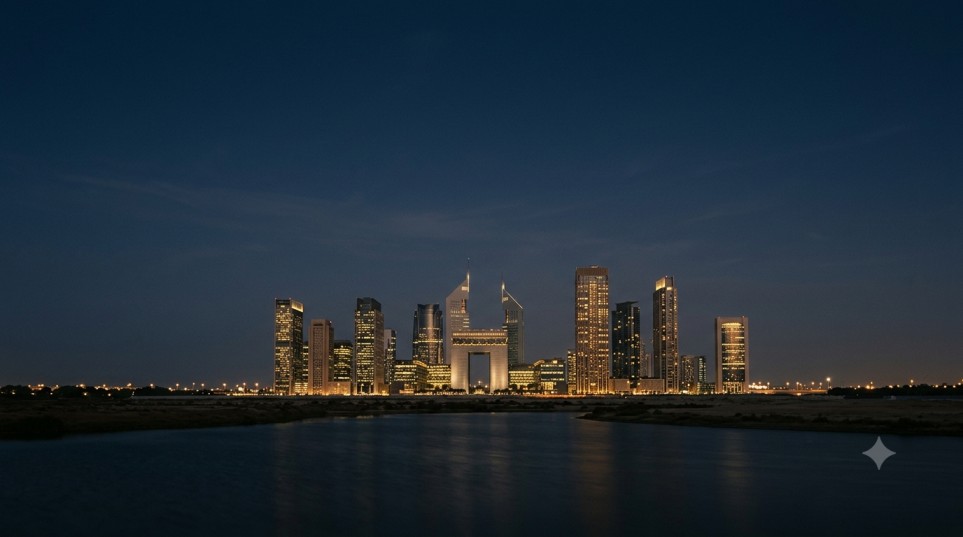 Dubai’s economy is being deliberately re-engineered. Under the Dubai Economic Agenda D33, which targets doubling GDP by 2033, three technologies – AI, Web3 and renewable energy – are being written directly into the emirate’s regulatory and financial infrastructure rather than bolted on afterwards.
That is genuinely significant, and it creates real openings for founders. But a lot of what circulates about it overstates where things currently stand, and one commonly repeated claim about free zone tax could cost you money.
Here is what is actually in place, what is still a pilot, and what it means if you are deciding where to base a business.
Quick Answer
- Dubai’s AI, Web3 and renewable energy regulatory framework is being deliberately re-engineered, not bolted on as an afterthought, and this creates real openings for founders.
- A commonly repeated claim, that a DIFC AI and Web3 licence automatically gives 0% corporate tax, is not accurate as stated and could cost you money if taken at face value.
- Some of what circulates about tokenisation and AI infrastructure funding is still at pilot stage, not fully operational, and the distinction matters for planning.
In this guide
What is actually changing in Dubai’s financial model?
Ownership is being fractionalised and regulated at government level – Dubai is embedding blockchain into property registration and building dedicated licensing for AI and Web3 firms, rather than merely permitting them.
The distinction matters, and it extends beyond crypto to anyone building autonomous AI products here. Plenty of jurisdictions tolerate crypto businesses. Dubai has built a regulator for them – the Virtual Assets Regulatory Authority – and connected it to the property registry, the central bank and the Dubai Future Foundation. That is a structural change to how assets are owned and traded, not a marketing initiative.
Is Dubai really tokenising real estate, or is that still a pilot?
It is live but early – a government-backed pilot, not yet a mature market.
The Dubai Land Department launched the Middle East’s first government-backed real estate tokenisation platform through Prypco Mint, putting property title deeds on-chain and allowing fractional purchases from AED 2,000. Ctrl Alt provides the infrastructure on the XRP Ledger, Zand Bank handles banking, and tokenised title deeds are recorded directly on DLD records.
Two things worth knowing before you build a business model around this:
- It is restricted. The platform currently serves UAE ID holders exclusively, with global expansion planned in later phases.
- The headline number is a forecast, not a fact. DLD projects tokenised property could reach AED 60 billion – roughly USD 16 billion, or 7% of total transactions – by 2033. That is a target. Material describing “massive liquidity injected into illiquid assets” is describing an ambition in the present tense.
For context on where the underlying property market actually sits today, see my H1 2026 Dubai real estate breakdown.
Does a DIFC AI and Web3 licence give me 0% corporate tax?
No. The DIFC AI & Web3 licence is a 90% subsidised licence fee – a discount on setup cost, not a tax exemption.
This is the most repeated error in UAE tech-hub content. The AI and Web3 licence is a 90 per cent subsidised commercial licence issued out of DIFC. Cheaper to obtain. It says nothing about corporate tax.
Free zone companies still fall under the UAE corporate tax regime. The 0% rate applies only to a Qualifying Free Zone Person on qualifying income, and technology and consultancy revenue frequently does not qualify. I set out the conditions in detail in the Fujairah free zone guide – the analysis applies equally here, and your corporate tax registration and filing obligations start from day one either way.
One practical restriction people miss: entities on the DIFC AI and Web 3.0 licence are prohibited from financial services and cryptocurrency activities including exchanges, must maintain a physical presence in DIFC, and while creating NFTs is permitted, selling them is not.
So if you are building a crypto exchange, the AI Campus is the wrong address. That is a VARA-regulated activity and a different licence entirely.
Where is the AI infrastructure money actually coming from?
Mostly Abu Dhabi, not Dubai – and the distinction matters when you are choosing a jurisdiction.
The USD 30 billion AI Infrastructure Partnership was co-launched by MGX with BlackRock, Microsoft and Global Infrastructure Partners, targeting data centres and energy platforms, with potential to scale to USD 100 billion. MGX was founded in 2024 under Abu Dhabi’s Artificial Intelligence and Advanced Technology Council, is based in Abu Dhabi Global Market, and is backed by Mubadala and G42.
That is a UAE story, and a serious one. But it is Abu Dhabi capital deployed through an ADGM entity. Articles that fold it into Dubai’s narrative blur a real distinction – and for a founder weighing DIFC against ADGM, that is exactly the kind of detail that should inform the decision rather than get smoothed over. If you are still comparing jurisdictions, start with mainland vs free zone vs offshore.
What is the Dubai AI and Web3 Campus, practically?
A dedicated campus inside DIFC offering subsidised licences, R&D facilities and accelerator programmes – with targets that are still targets.
It sits within DIFC’s Innovation One premises, spanning over 100,000 sq ft, with stated goals of attracting 500+ AI and Web3 startups, USD 300 million in collective funds and 3,000+ jobs by 2028.
Worth noting it is not new – it began issuing licences in 2023. The 2028 figures are objectives, not achievements, and should be read that way when a provider quotes them to you.
How does renewable energy fit into this?
AI is enormously power-hungry, so cheap low-carbon electricity is becoming a competitive advantage rather than a sustainability line item.
Dubai Electricity and Water Authority applies predictive models to forecast generation, optimise solar output and schedule maintenance across its solar infrastructure. As AI data centres demand unprecedented electricity, anchoring that compute to renewable generation turns “green compute” into a pricing advantage – and the UAE’s Net Zero 2050 commitment gives it a policy runway.
For a founder, the practical read is simple: energy cost and energy sourcing are becoming part of the location decision for anything compute-intensive, in a way they were not five years ago.
What does this mean if you are setting up here?
Strip away the announcements and three things hold true:
- Regulatory clarity is the real product. VARA gives virtual asset businesses something most jurisdictions cannot: a named regulator with published rules. For a Web3 company that is worth more than a licence discount.
- Subsidised licences are a cash-flow benefit, not a tax position. Budget for corporate tax from day one and get the qualifying-income analysis done before incorporation, not after your first audit.
- Jurisdiction choice is now genuinely consequential. DIFC, ADGM, DMCC and VARA-licensed structures are not interchangeable. AI-for-financial-services, institutional crypto and Web3 consumer products each point toward a different answer.
Most enquiries I receive ask which free zone is cheapest. A better question is: what is my regulated activity, who is my customer, and which regulator do I actually need to sit under? Answer that and the jurisdiction largely selects itself. Answer it second and you pay to restructure.
Most consultants will help you register the company. I help you make informed business decisions before you invest – including telling you when the licence being marketed to you does not match the business you are describing. That extends through free zone formation, corporate banking and wider setup advisory as one connected decision.
Because successful businesses aren’t built by chance – they’re built on informed decisions.
Planning an AI, Web3 or clean-energy venture in the UAE? Let’s start with strategy, not paperwork.
My Approach: Beyond the AI and Web3 Headlines
Most business setup consultants help you register a company. I help you make informed business decisions before you invest.
Dubai’s AI and Web3 push creates real opportunity, but a DIFC AI and Web3 licence does not automatically mean 0% corporate tax, and the infrastructure investment described here does not mean every AI-adjacent business model is ready for this market yet. Before recommending a route in, I check whether your specific business needs DIFC’s regulatory environment or whether a simpler structure serves you just as well.
My advisory process focuses on helping you reduce uncertainty and make confident decisions, not just complete documentation.
What You Can Expect
- Business idea validation
- Market research
- Competitor analysis
- Business plan development
- Startup cost estimation
- Financial feasibility analysis
- Business structure recommendations
- Licence selection guidance
- Investor and employment visa planning
- Business bank account strategy
- Risk assessment
- Business expansion planning
The objective is simple: help you start your business with clarity, confidence and a long-term strategy.
Frequently asked questions
Can you buy tokenised property in Dubai?
Yes. The Dubai Land Department operates a government-backed real estate tokenisation platform through Prypco Mint, with fractional purchases from AED 2,000 and title deeds recorded on the XRP Ledger. The pilot currently serves UAE ID holders only, with wider access planned in later phases.
Does a DIFC AI and Web3 licence mean 0% corporate tax?
No. It is a 90% subsidised commercial licence – a reduction in setup cost, not a tax exemption. Free zone companies fall under the UAE corporate tax regime, and the 0% rate applies only to a Qualifying Free Zone Person on qualifying income.
Can a crypto exchange be licensed at the Dubai AI and Web3 Campus?
No. Entities on the DIFC AI and Web 3.0 licence are prohibited from financial services and cryptocurrency activities including exchanges. Creating NFTs is permitted but selling them is not. Virtual asset exchanges are regulated by VARA under a different licence.
Is the USD 30 billion MGX AI fund a Dubai initiative?
It is a UAE initiative but Abu Dhabi capital. MGX was founded in 2024 under Abu Dhabi’s Artificial Intelligence and Advanced Technology Council and is based in Abu Dhabi Global Market. It co-launched the USD 30 billion AI Infrastructure Partnership with BlackRock, Microsoft and Global Infrastructure Partners.
Last reviewed: 27 July 2026. General information, not tax, legal or investment advice. Licensing rules, regulatory perimeters and programme targets change frequently – verify with DIFC, VARA, the FTA and the relevant authority before acting.
Related reading: how tokenisation is reshaping UAE digital assets in 2026.
Sources & References
How fast this is actually moving, sector by sector
AI adoption inside Dubai’s government and financial sectors has moved from pilot programmes to production use noticeably faster than in most comparable markets, largely because regulatory sandboxes here are designed to let a working product launch quickly under supervision rather than requiring years of pre-approval. That structural choice matters more to a founder than the headline investment figures, because it determines how quickly a new AI or fintech product can actually reach paying customers once built.
Web3 adoption has followed a more deliberate, infrastructure-first path. Rather than chasing retail speculation, the emirate’s approach has concentrated on licensing frameworks for exchanges, custody providers and tokenisation platforms, which has attracted institutional players who need regulatory certainty before committing capital. That is a slower story to tell in a headline, but it is arguably the more durable foundation for a business built around blockchain infrastructure rather than short-term trading activity.
Renewable energy sits on a different timeline again. Large-scale solar capacity additions are multi-year construction projects by nature, and the announced pipeline reflects commitments made years in advance rather than a reaction to current headlines. For a business in the energy services, EPC contracting, or clean-tech supply chain space, this means the opportunity is planning-cycle driven: positioning ahead of an announced project’s tender window matters more than reacting once construction has already started.
Getting the licensing structure right from day one
A common mistake among founders entering this space is choosing a generic technology or trading licence because it is quick to obtain, without checking whether the specific activity, AI model deployment, token issuance, or renewable energy trading, requires a specialised authority’s approval. AI companies handling personal data at scale may need to register activity that triggers data protection obligations beyond a standard licence. Businesses issuing or trading digital assets need to confirm whether their specific activity falls under virtual asset regulation, which is a separate approval process from a standard commercial licence.
Getting this wrong does not usually block the initial company formation, since a general licence can often be issued without flagging the mismatch. It shows up later, when a bank declines to open an account for an activity the licence does not clearly cover, or when a regulator requires retroactive registration once the business has scaled. Confirming the correct activity code and any additional regulatory registration before incorporation, rather than after the business is operating, avoids a costly restructuring exercise down the line.
This is worth checking even for founders confident their activity is straightforward, since the boundary between a standard technology licence and a regulated activity has shifted more than once as these frameworks matured, and what was uncontroversial eighteen months ago is not always treated the same way today.
Whichever of these three growth areas your business touches, the practical starting point is the same: confirm the exact licensing category before committing, since it is far cheaper to get right at incorporation than to correct once the business is operating and generating revenue under the wrong classification.
None of these three growth areas move at exactly the same pace, so treating them as a single unified opportunity, rather than three separate timelines with three separate regulatory paths, is the mistake worth avoiding most.
What the Dubai AI Web3 economy means for your business setup
The Dubai AI Web3 economy is not a single market – it is three overlapping regulatory environments (VARA, DIFC, and the DMCC Crypto Centre) running in parallel, each with different licence types, compliance requirements and tax positions. Understanding which part of the Dubai AI Web3 economy your product sits in is the starting point for any setup decision. For founders moving here from markets with less developed Web3 regulation, the framework is genuinely ahead of where most jurisdictions are.
Pingback: Tokenization in the UAE 2026: Regulators, Data and Setup