Quick Answer
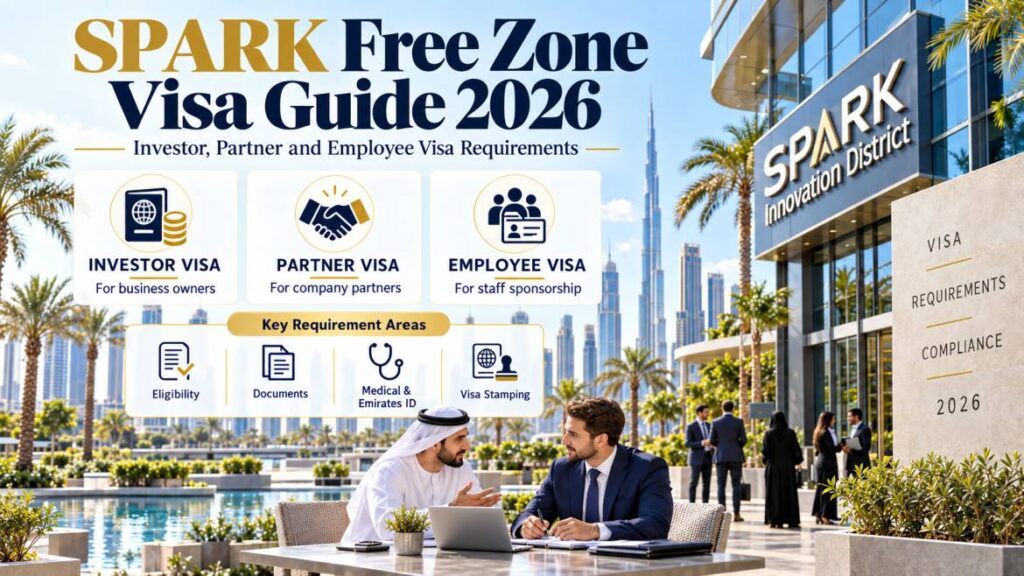
A SPARK free zone visa, issued through the free zone many founders still know by its former name, SRTIP free zone, comes in three practical forms: investor visa (for shareholders, tied to the licence and share capital), partner visa (for co-founders holding shares, similar process to the investor route), and employee visa (sponsored by the company for staff, tied to a job role rather than ownership). Each SPARK free zone visa type runs through the same broad steps, entry permit, medical test, Emirates ID, visa stamping, but eligibility, validity period and who sponsors whom differ. This covers what each visa type actually requires, what it costs, and where founders most often get the sequencing wrong.
Table of Contents
Investor Visa: Ownership-Based Residency
An investor visa is tied to holding shares in the SPARK (SRTIP Freezone) company, generally requiring a minimum share allocation and the licence itself to be issued first. Validity typically runs multiple years, often renewable alongside the licence term, and the visa is usually the founder’s own route to UAE residency rather than something sponsored by an external employer. This is the visa most solo founders and shareholders apply for, and it’s the one built into the per-visa pricing tiers covered in SPARK free zone cost 2026.
Partner Visa: The Co-Founder Route
Where a company has more than one shareholder, each qualifying shareholder can generally apply for their own investor-class visa, sometimes referred to as a partner visa, following the same broad eligibility logic, a genuine shareholding in the company, rather than an employment relationship. The practical planning question for multi-founder SPARK companies is how many visas the chosen package actually includes, since each additional partner visa beyond the package allocation adds to the real first-year cost in a way a single-founder cost estimate won’t show.
Employee Visa: Sponsored by the Company, Not Ownership-Based
An employee visa is sponsored by the company for staff who aren’t shareholders, generally tied to a job offer and, depending on the free zone’s own policy, sometimes to salary or role requirements. Validity commonly ranges from one to three years depending on the employment contract and package terms. Unlike the investor route, this visa depends on the company’s employment structure being in place and documented, which is worth planning for at the licence-activity stage covered in the SPARK free zone setup process, rather than treated as an afterthought once hiring starts.
The Visa Process Itself, Step by Step
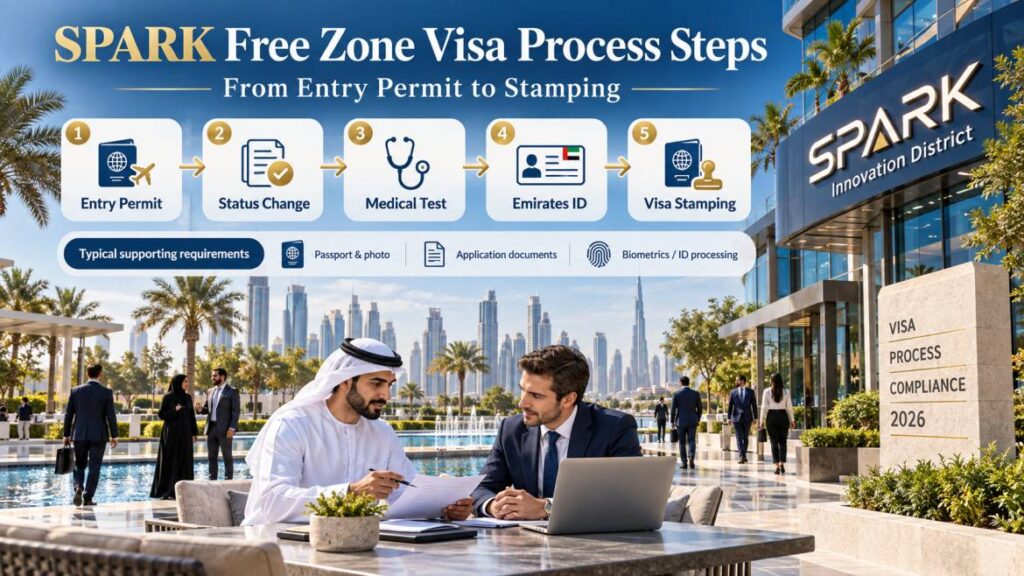
Regardless of visa type, the mechanical process follows broadly the same sequence:
- Entry permit, generally issued within around 15 days and valid for roughly 60 days to complete the remaining steps.
- Medical fitness test, a blood test and chest X-ray at an approved centre, required for all visa types.
- Emirates ID registration, processed alongside or shortly after the medical test.
- Visa stamping, completed in-country for most applicants, finalising the residency visa in the passport.
None of these steps are unique to investor, partner or employee visas individually, what differs is who initiates the application, the shareholder for an investor or partner visa, the company for an employee visa, and what documentation each route needs upfront. The Federal Authority for Identity, Citizenship, Customs and Port Security is the official reference for current entry permit validity, medical testing centres and Emirates ID requirements, worth checking directly if a step in your own SPARK free zone visa application doesn’t match what’s described here.
Dependent Visas: A Common Add-On Founders Underplan For
A holder of any of the above visa types can generally sponsor a spouse and children as dependents, subject to demonstrating sufficient income and suitable housing. Dependent visa validity generally aligns with the sponsor’s own visa. This is worth budgeting for explicitly rather than discovering as a surprise add-on cost after the founder’s own visa is already issued, since it follows the same medical test, Emirates ID and stamping sequence, each adding to the real total.
Where Founders Get the SPARK Free Zone Visa Sequencing Wrong
The most common mistake isn’t choosing the wrong visa type, it’s assuming the visa process runs in parallel with licence issuance rather than after it. The licence has to be issued before most visa applications can meaningfully proceed, which means a founder expecting to be resident within days of applying is usually working from the licence-issuance timeline, not the full visa timeline. Planning the visa stage as its own distinct phase, with its own realistic duration, avoids that mismatch.
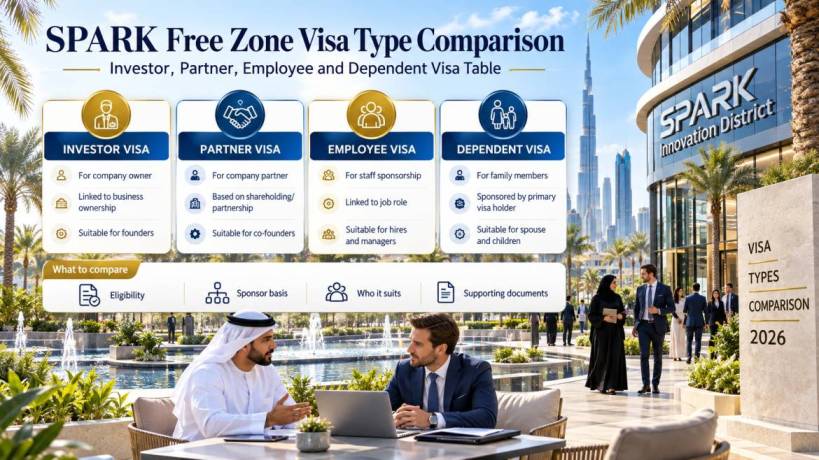
| Visa type | Who it’s for | Typical validity |
|---|---|---|
| Investor visa | Sole shareholder / founder | Multiple years, often renewable with the licence |
| Partner visa | Co-founders holding shares | Same as investor visa |
| Employee visa | Non-shareholder staff, company-sponsored | 1–3 years, tied to employment contract |
| Dependent visa | Spouse and children of a visa holder | Aligned to the sponsor’s own visa |
My Approach: The Right Visa Type, Planned From Day One
Visa strategy isn’t a step I leave until after the licence is issued. For a multi-founder company, I work out how many partner visas the package actually needs to include before choosing the tier, and for any business planning to hire, I make sure the activity scope and employment structure support employee visa sponsorship from the outset. The fuller case for working this way is in why founders choose to work with me.
If you’re planning a SPARK setup and want the visa count and type worked out before you commit to a package, get in touch.
Frequently Asked Questions
What’s the difference between an investor visa and a partner visa under SPARK?
In practice, very little, both are ownership-based routes tied to holding shares in the company. “Partner visa” generally just describes the investor-class visa for a co-founder rather than a sole shareholder.
Can employees get a UAE residency visa through a SPARK company?
Yes, an employee visa is sponsored by the company based on a job offer, separate from the ownership-based investor or partner route, and validity typically runs one to three years.
How long does the SPARK visa process take from start to finish?
Realistically longer than licence issuance. The entry permit alone is often issued within around 15 days, and the full process, medical test, Emirates ID and stamping, adds further time on top.
Do I need my SPARK licence before applying for a visa?
Yes, in almost all cases visa applications proceed after licence issuance, not in parallel with it, which is a common source of unrealistic timeline expectations.
Can I sponsor my spouse and children on a SPARK investor visa?
Generally yes, subject to demonstrating sufficient income and suitable housing, with dependent visa validity typically aligned to your own visa term.
Does each visa package tier include a fixed number of visas?
Yes, SPARK’s packages are structured around visa count, so the number of partner or employee visas you’ll actually need should be settled before choosing a tier, not added on afterward.
What’s the most common visa planning mistake founders make?
Assuming visa processing runs alongside licence issuance rather than after it, which leads to unrealistic expectations about when the business will actually be operational.