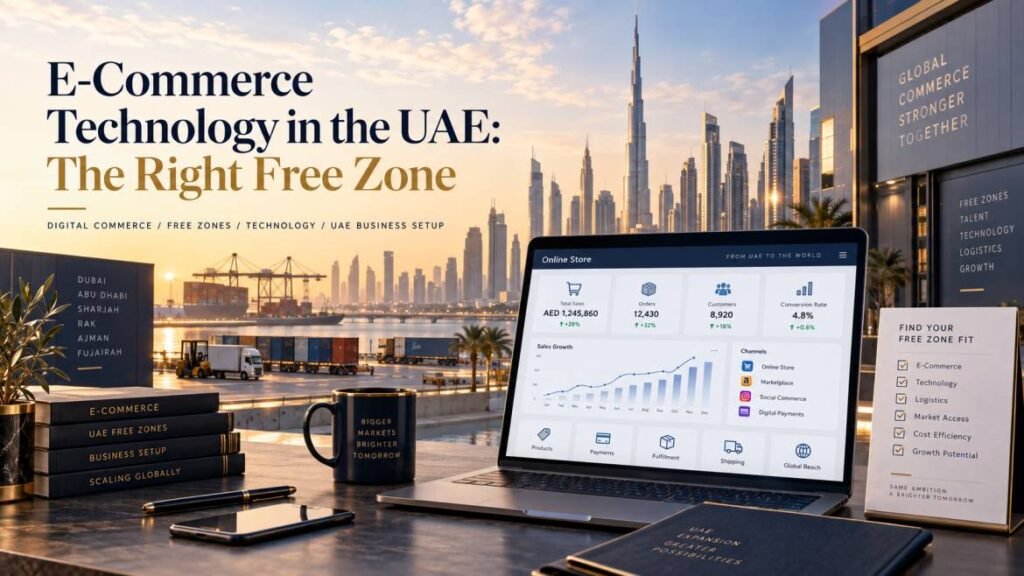
The honest version of this advice is that no single free zone or accelerator is the right answer for every e-commerce founder in the UAE. Warehousing needs, payment gateway access, customs handling for cross-border fulfilment and the realistic cost of running lean in the first year all pull in different directions depending on your specific model. The founders who get the most value out of any accelerator programme, SPARK included, tend to be the ones who went in already clear on what gap they needed the programme to fill, rather than treating the acceptance itself as the milestone that mattered.
If you are still deciding, a practical test works better than reading another comparison article: list the three things your e-commerce business genuinely needs from a free zone in year one, whether that is a bonded warehouse, a specific payment licence, or fast visa issuance for a small founding team, and check each accelerator or free zone against that list directly rather than against its marketing. SPARK will be a strong fit for some of those lists and a weak one for others, and that is true of every free zone in the UAE, not a criticism unique to this one.
I get asked about SRTIP Accelerator, now rebranded SPARK, more than almost any other free zone, usually by e-commerce founders who’ve heard it’s the launchpad to use. Here’s my honest take: it depends entirely on what you’re actually building. E-commerce technology UAE businesses and e-commerce trading businesses are genuinely different, and the free zone that fits one is often the wrong choice for the other.
A storefront selling physical products online, dropshipping, a Shopify brand, needs trading and fulfilment infrastructure. A business building the technology underneath e-commerce, a logistics platform, a retail analytics tool, a checkout or inventory system sold to other sellers, is a genuine fit for SRTIP Accelerator’s actual strength. Confusing the two leads founders toward the wrong jurisdiction for what they’re actually building. Here’s where I think it fits, where it doesn’t, current pricing, and what actually helps with tax compliance and payment gateway readiness, without the guarantees nobody can honestly make.
Quick Navigation
Quick Answer
- E-commerce technology UAE businesses, platforms, logistics software, retail-tech tools sold to other sellers, fit SPARK (formerly SRTIP Accelerator), the Sharjah free zone built around AI, technology and research-classified activity.
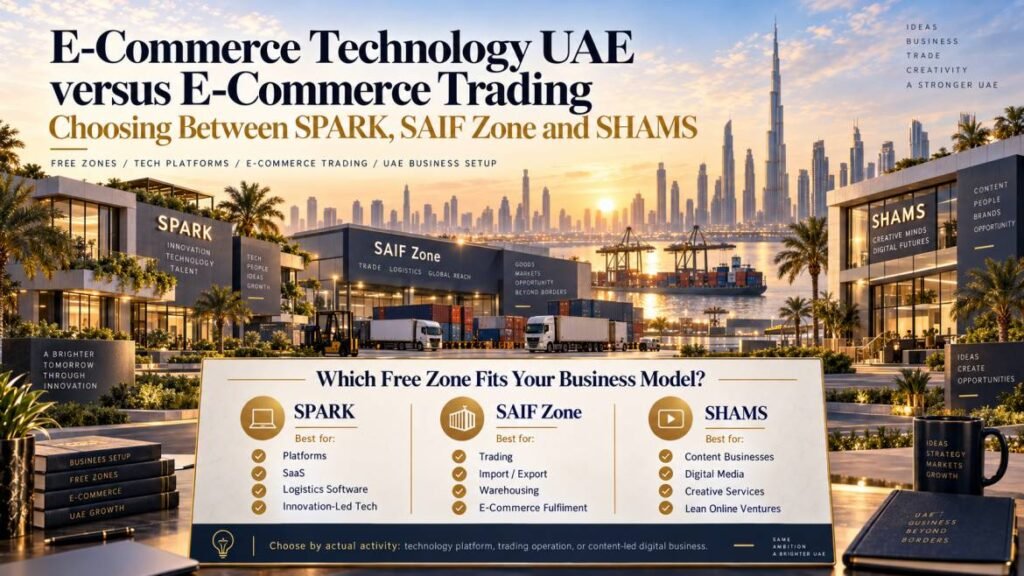
- E-commerce trading businesses, storefronts, dropshipping, direct-to-consumer brands, fit SAIF Zone or SHAMS instead.
- Current SPARK pricing starts at AED 3,999 for the zero-visa Starter tier, current as of a direct check against the official page; older content citing AED 5,500 predates an April 2026 price change.
- UAE corporate tax is 9% on profits above AED 375,000. A Qualifying Free Zone Person can access 0% on qualifying income only, subject to substance and activity conditions, not a blanket free zone exemption.
- Payment gateway approval cannot be guaranteed by any consultant. What genuinely helps: complete documentation (incomplete sets account for 61% of UAE rejections per one industry source) and confirming your specific free zone licence is on your chosen gateway’s approved list before you commit to a jurisdiction.
E-Commerce Technology UAE: Two Genuinely Different Businesses
Start with the distinction, since it decides everything that follows.
An e-commerce technology business builds and sells software or infrastructure that other e-commerce sellers use: a logistics or fulfilment platform, a retail analytics tool, an inventory or checkout system, an AI-driven personalisation engine. An e-commerce trading business sells physical products directly to consumers: a Shopify storefront, a dropshipping operation, a direct-to-consumer brand.
These have almost nothing in common operationally. One is fundamentally a software company that happens to serve the e-commerce sector. The other is fundamentally a retail business that happens to sell online. Treating them as the same category for free zone purposes, as a lot of generic “e-commerce setup” content does, sends both toward a compromise jurisdiction that doesn’t actually fit either one well.
Why E-Commerce Technology UAE Founders Fit SPARK Specifically
If you’re building the technology layer, not the storefront, this is a genuine, defensible fit, not a stretch.
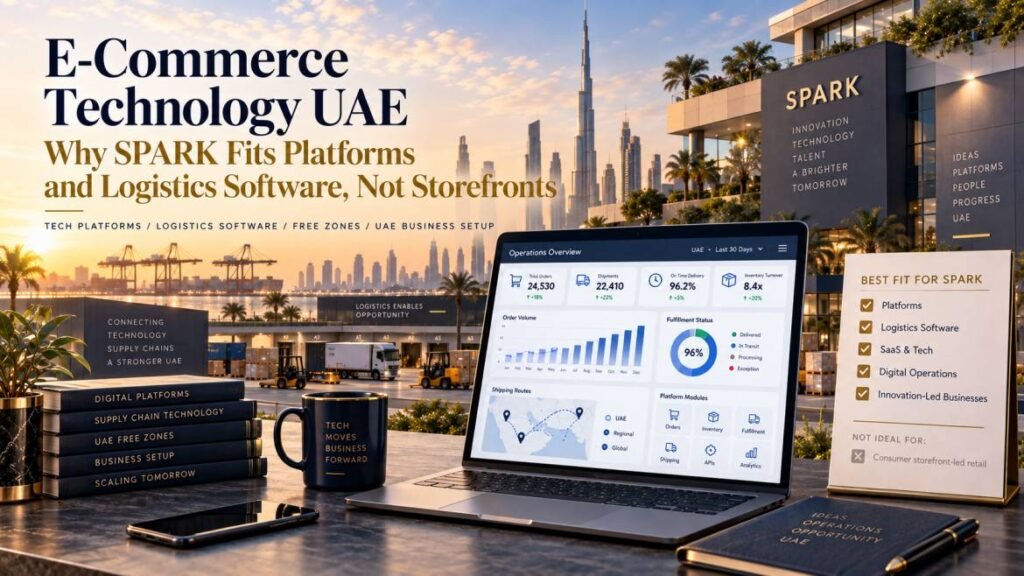
SPARK, the Sharjah free zone formerly known as SRTIP Accelerator, has quietly become substantially an AI and digital technology hub, with digitalization confirmed as its largest licensed sector by a wide margin. For a founder building software that serves e-commerce, a logistics platform, a retail-tech tool, a data or personalisation engine, that’s a genuine peer environment, not a mismatched one. SPARK also offers dedicated research labs and an academic ecosystem inside Sharjah’s University City, advantages built for a technology company, not a trading one. The full breakdown of SPARK’s rebrand, sector data and dual-licensing mechanics is covered in SRTIP SPARK Sharjah free zone.
This is a narrower claim than “SPARK is the best zone for e-commerce,” and it’s worth being precise about why: a general online storefront doesn’t touch SPARK’s actual strengths at all. A platform or software business genuinely does.
Current SRTIP Accelerator Pricing for E-Commerce Technology UAE Founders
Pricing for this free zone changed in 2026, and it’s worth stating precisely rather than repeating a number that may already be stale.
As of a direct check against the official SPARK page, the Starter package begins at AED 3,999 for zero visas, rising with visa allocation, with Growth and Elite tiers above that adding shareholder capacity, activities, and, from Growth upward, corporate tax registration support. This replaced an earlier AED 5,500 structure. If you’ve read a figure of AED 5,500 to 6,510 elsewhere, that content predates the change. The full current tier breakdown, including exactly what each package includes, is in the dedicated SPARK post linked above.
The UAE Corporate Tax Mechanic for E-Commerce Technology UAE Founders, Stated Correctly
This applies regardless of which free zone or business type you choose, and it’s worth stating precisely since “0% free zone tax” is repeated far more often than it’s explained accurately.
The UAE applies 9% corporate tax on profits above AED 375,000. A Qualifying Free Zone Person can access a 0% rate, but only on qualifying income, subject to meeting substance and activity conditions, not as a blanket exemption covering every free zone company automatically. This applies whether you’re running an e-commerce technology business or a trading one. The detailed mechanics, including how this specifically affects distribution and domestic sales, are covered in starting an e-commerce business in the UAE: the honest numbers on licence, tax and delivery costs.
What Actually Helps SRTIP Accelerator Founders With Payment Gateway Readiness
No consultant can guarantee a payment processor’s underwriting decision, since that decision belongs entirely to the processor and its acquiring bank. What genuinely helps is specific and worth stating honestly instead.
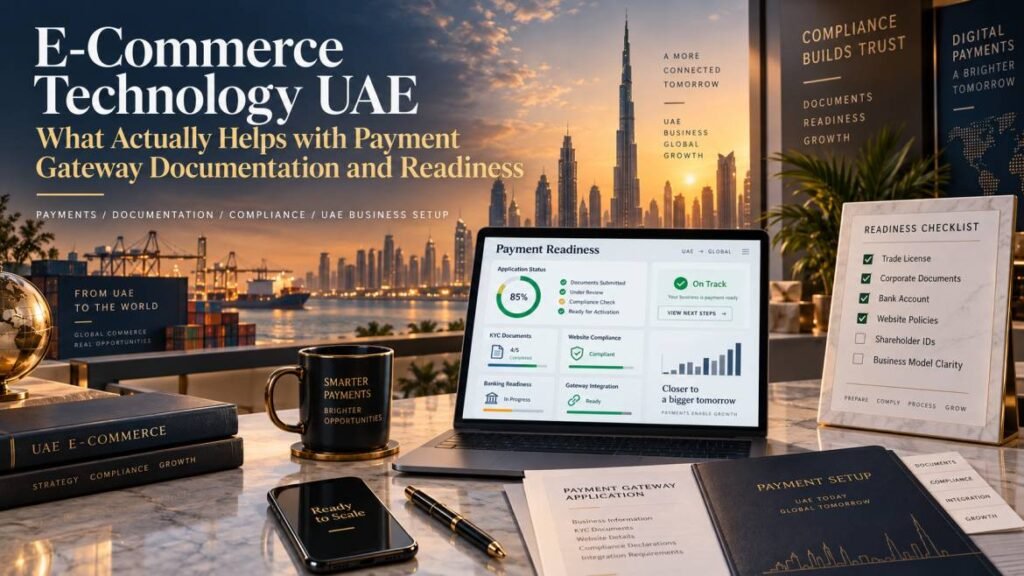
Every major UAE payment gateway, Stripe UAE, Checkout.com, Network International, Telr and others, requires a valid UAE trade licence at the point of onboarding, as a baseline. Beyond that baseline, one industry source reports that incomplete documentation accounts for 61% of UAE payment gateway application rejections, making thorough, complete documentation the single highest-leverage thing within your control.
Separately, not every free zone licence is accepted by every gateway, Stripe UAE specifically has been flagged as selective in current guidance, so confirming your intended gateway’s accepted-licence list before you commit to a jurisdiction is a genuinely useful, actionable step, rather than discovering a mismatch after you’ve already registered. Certain business categories, including travel, forex, supplements and healthcare, face extended underwriting periods of 10 to 21 days, worth building into your launch timeline if it applies to you.
If You’re Building a Storefront, Not a Platform
To be direct about the boundary: if your business is selling physical products to consumers, a Shopify store, a dropshipping operation, a direct-to-consumer brand, SRTIP Accelerator is not the natural fit described above. That activity belongs at SAIF Zone, for fulfilment and physical trading infrastructure, or SHAMS, for a purely digital storefront without warehousing needs. The full activity-by-activity breakdown across Sharjah’s free zones is in business setup in Sharjah: SAIF Zone, SHAMS, SPARK and Hamriyah compared.
My Approach: Matching E-Commerce Technology UAE Founders to the Right Structure
Most business setup consultants help you register a company. I help you make informed business decisions before you invest.
The e-commerce founders who end up with the wrong setup are rarely the ones who chose carelessly. They’re the ones who followed generic “best free zone for e-commerce” advice without distinguishing what they were actually building, a platform or a storefront, and ended up in a jurisdiction that fit neither well. Getting that distinction right first is what the rest of the setup depends on.
My advisory process focuses on helping you reduce uncertainty and make confident decisions, not just complete documentation. In practice:
- Honest assessment of whether your business is genuinely e-commerce technology or e-commerce trading, before the free zone conversation starts.
- QFZP and corporate tax structuring appropriate to your actual activity and income type, not a blanket “0% free zone” assumption.
- Documentation preparation aimed at the specific requirements of the payment gateway you intend to use, confirmed before you commit to a jurisdiction.
- Business setup and licensing execution across whichever free zone genuinely fits what you’re building.
- Corporate tax registration and filing planning matched to your specific structure.
- Banking setup guidance suited to an e-commerce technology or trading business specifically.
The objective is simple: help you choose the free zone that matches what you’re actually building, with the tax and payment groundwork done properly, not guaranteed outcomes that no one can honestly promise.
If you’re building an e-commerce technology or trading business and want the right structure confirmed before you commit, get in touch.
Frequently Asked Questions
Is SRTIP Accelerator the best free zone for e-commerce technology UAE founders?
For e-commerce technology specifically, platforms, logistics software, retail-tech tools, yes, given SPARK’s AI and technology focus. For general e-commerce trading, a storefront or dropshipping business, SAIF Zone or SHAMS fits better.
How much does SRTIP Accelerator cost in 2026?
The Starter package begins at AED 3,999 for zero visas, current as of a direct check against the official page. This replaced an earlier AED 5,500 structure; content still citing that figure predates the change.
Do free zone companies pay 0% corporate tax?
Not automatically. UAE corporate tax is 9% on profits above AED 375,000. A Qualifying Free Zone Person can access 0% only on qualifying income, subject to substance and activity conditions.
Can a consultant guarantee my UAE company gets approved for a payment gateway?
No. Payment gateway underwriting is an independent decision made by the processor and its acquiring bank. What genuinely helps is complete documentation and confirming your specific free zone licence is accepted by your intended gateway before you commit to a jurisdiction.
Does every UAE free zone licence work with every payment gateway?
No. Some gateways, Stripe UAE among them, are selective about which free zone licences they accept. Confirm this directly with your intended gateway before choosing a jurisdiction, rather than after.
What’s the actual difference between e-commerce technology and e-commerce trading?
E-commerce technology means building software or infrastructure that other sellers use, a logistics platform, an analytics tool, a checkout system. E-commerce trading means selling physical products directly to consumers online. The two need different free zone structures.
How long does it actually take to launch an e-commerce technology UAE business, start to finish?
Licence issuance itself is usually days once your documents are confirmed. What extends the real timeline is banking and payment gateway approval afterward, which can add one to several weeks depending on your bank, your gateway, and your specific business category. Plan your launch date around when banking and payments are live, not around the licence date alone.
Sources & References
- UAE Federal Tax Authority
- SPARK (formerly SRTIP Accelerator) official website
- UAE Central Bank – Retail Payment Services regulation
Whether SRTIP Accelerator, now SPARK, is the right launchpad for an e-commerce founder depends entirely on the specific stage and product you are bringing to it, not on its reputation alone. Go in with clear eyes about what SPARK does and does not offer an e-commerce business.
The honest version of this advice is that no single free zone or accelerator is the right answer for every e-commerce founder in the UAE. Warehousing needs, payment gateway access, customs handling for cross-border fulfilment and the realistic cost of running lean in the first year all pull in different directions depending on your specific model. The founders who get the most value out of any accelerator programme, SPARK included, tend to be the ones who went in already clear on what gap they needed the programme to fill, rather than treating the acceptance itself as the milestone that mattered.
If you are still deciding, a practical test works better than reading another comparison article: list the three things your e-commerce business genuinely needs from a free zone in year one, whether that is a bonded warehouse, a specific payment licence, or fast visa issuance for a small founding team, and check each accelerator or free zone against that list directly rather than against its marketing. SPARK will be a strong fit for some of those lists and a weak one for others, and that is true of every free zone in the UAE, not a criticism unique to this one.